Can you heat a louvered pergola?
Yes, many homeowners add a heater to the patio under a louvered pergola so they can use it on cool evenings. The heater needs to be chosen, placed, and installed with care.
A louvered pergola gives you a roof overhead with open sides. That affects how much warmth stays in the space, how much airflow there is, and what kind of heater makes sense. This article covers the common heater types, safety basics, and what to plan before you buy.
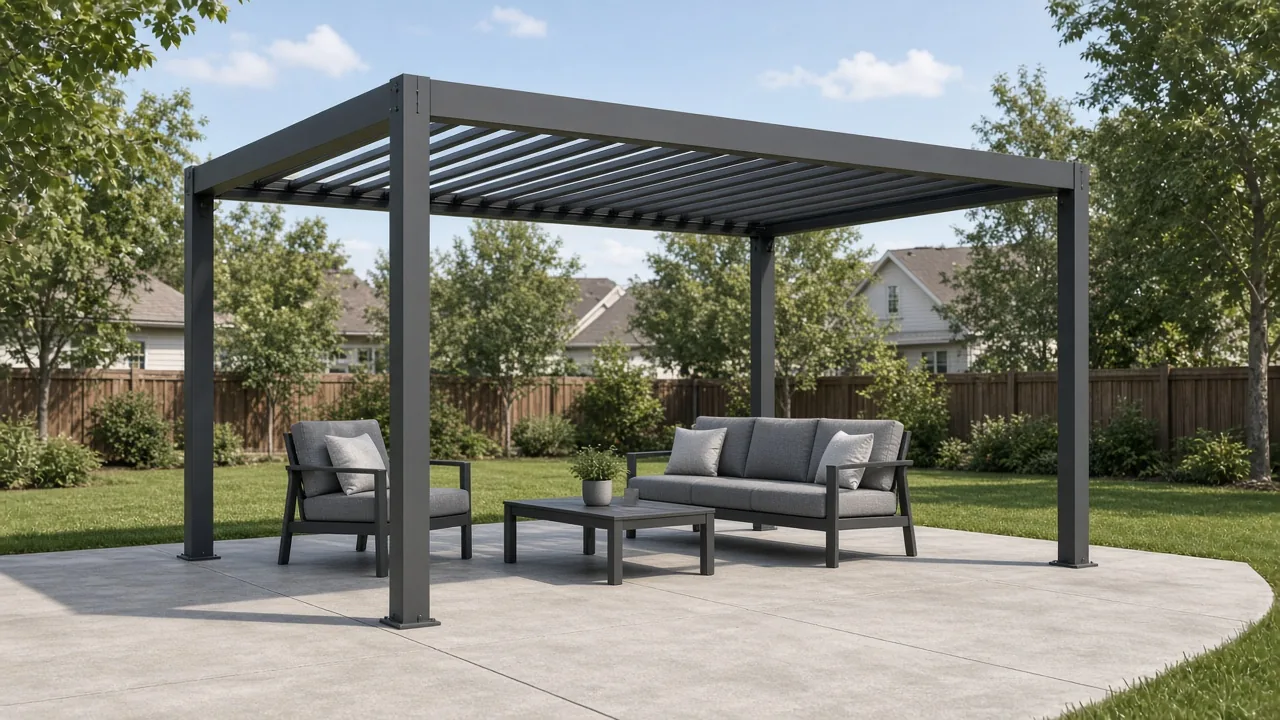
How well does a louvered pergola hold heat?
A louvered pergola is a roof on posts with open sides. With the louvers closed, the roof blocks some heat from rising straight up into the night sky. With open sides, though, breezes carry warm air away.
That is why heaters that warm people and surfaces directly tend to work best in this kind of space. A good goal is a comfortable seating area. The patio will still feel like an outdoor space.
What types of heaters work under a pergola?
There are three common types of patio heat.
| Type | How it works | Main planning questions |
|---|---|---|
| Electric infrared | Warms people and surfaces in its path | Needs its own electrical circuit and a licensed electrician |
| Propane or natural gas patio heater | Burns gas to produce heat | Needs airflow and the maker’s clearance from the roof |
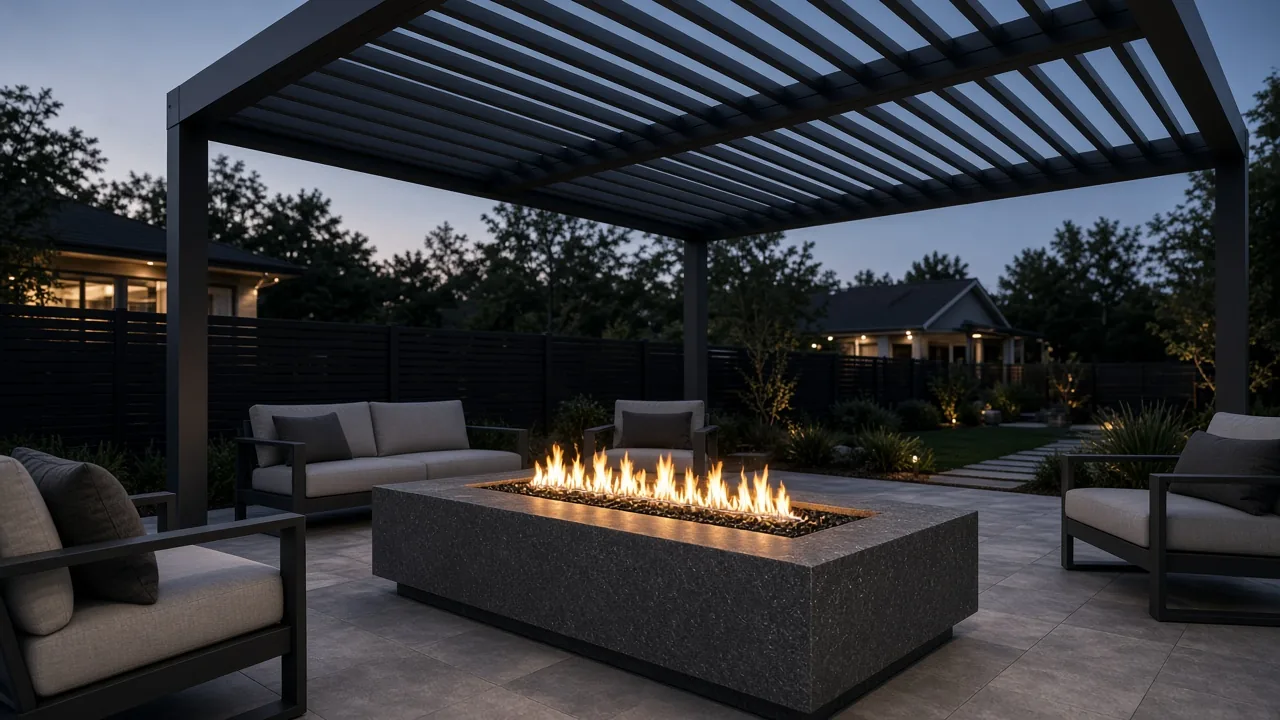
| Fire pit or fire table | Open flame for warmth and atmosphere | Needs airflow, clearance, and a check of local fire rules |
Each type has its own installation instructions. Follow the heater maker’s instructions and your local codes for whichever one you choose.
What should you know about electric heaters?
Electric infrared heaters are popular for covered patios because they produce no flame or fumes and warm people directly.
- Use a heater rated for outdoor use.
- Plan the circuit with a licensed electrician. A patio heater usually needs its own circuit. The pergola’s motor has its own power connection, and the heater should be planned separately. Tell your electrician about both.
- Follow the maker’s clearances from the roof, beams, posts, and anything else nearby.
For the pergola’s own power needs, see motorized pergola electrical requirements.
What about gas heaters and fire features?
Anything that burns fuel needs fresh air. Combustion uses oxygen and gives off heat, smoke, and gases, including carbon monoxide.
- Open the louvers when you use a gas heater, fire pit, or fire table under the pergola, so heat and smoke can rise out.
- Keep the sides open. Enclosing the sides changes how air moves through the space.
- Follow the maker’s clearance between the flame or heater top and the roof.
- Check local fire rules and your HOA before adding an open flame feature. Some areas restrict fire pits or limit them under covered structures.
If you are not sure whether a fire feature is allowed under a roof where you live, ask your local building or fire department.
Can I mount a heater to the pergola frame?
Plan this carefully before you buy a heater. The pergola frame holds the louvers, the drainage channels, and the motor, which is hidden in the frame. Drilling into it or adding weight to it is a structural question.
Before attaching anything to the frame, confirm against the product drawings and local codes. Email [email protected] with your site and installation questions before you order, or contact [email protected] after you order. A freestanding heater placed at the right clearance avoids drilling into the frame at all.
Where should a heater go?
A few placement rules apply to almost every type:
- Keep the maker’s required clearance from the roof, beams, posts, furniture, cushions, and plants.
- Keep heaters away from the louvers so they can rotate freely through their full 0 to 120 degree range.
- Keep gas heaters and fire features on a stable, level surface away from walkways.
- Keep cords and gas lines out of the way of foot traffic.
- Never leave a heater or open flame running unattended.
Keeping the right distance protects the heater, the pergola’s powder-coated finish, and the people using the space.
What else should you plan before adding heat?
Heat is one part of making a patio usable on cool evenings. Before you buy a heater, think about:
- Where people sit. Place heat where it reaches the seating area.
- Power planning. If you want an electric heater, plan it with the electrician at the same time as the pergola’s connection.
- Permits. Electrical and gas work often need permits. Our pergola permit guide explains what to check.
- Size. A 10×20 covers a larger seating area than a 10×13, so you may need more than one heater. See the size guide.
Does a louvered pergola help in cold, wet weather?
Partly. With the louvers closed, the roof keeps rain off the seating area, and water runs from the louvers into the beam channels and down through the posts. Open sides still let in wind-blown rain. For more detail, see can a louvered pergola keep you dry in the rain.
FAQ
Can I add a heater to a Louvano pergola?
Ask [email protected] before you order if a heater is part of your plan. Whatever heater you use, choose one rated for outdoor use and follow its maker’s instructions.
Can I use a propane heater under a louvered pergola?
Many homeowners do. Open the louvers, keep the sides open, keep the maker’s clearance from the roof, and follow local codes.
Can I enclose the sides to keep the heat in?
Enclosing the sides changes airflow, and combustion heaters always need fresh air. Email [email protected] with your site and installation questions before you order.
Do I need an electrician for an electric heater?
Yes. Use a licensed electrician and plan the heater circuit separately from the pergola’s power connection.
More answers are on our FAQ page.