How does a louvered pergola drain water?
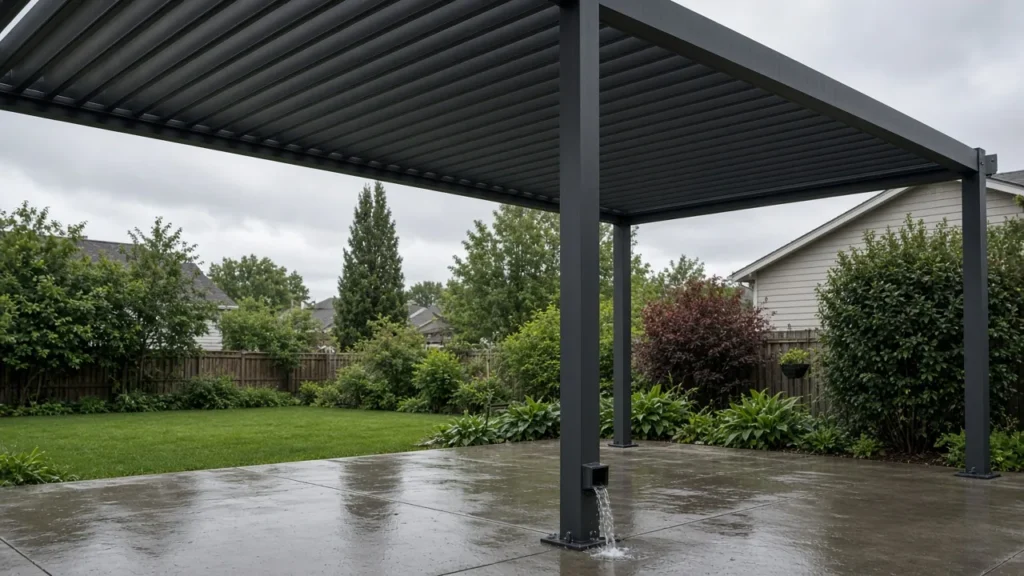
When the louvers are closed, rain runs off the louvers into channels in the beams, then down through the posts, and out near the post bases. On a Louvano pergola this drainage is concealed inside the frame, so you do not see gutters or downspouts hanging off the outside.
The path works best when the louvers are fully closed. Open louvers let rain through, and open sides can let wind-blown rain in. This article explains each step, what to plan where the water comes out, and how to keep the system clear.
What is the drainage path on a louvered pergola?
On a Louvano pergola, water follows the same route every time it rains on a closed roof:
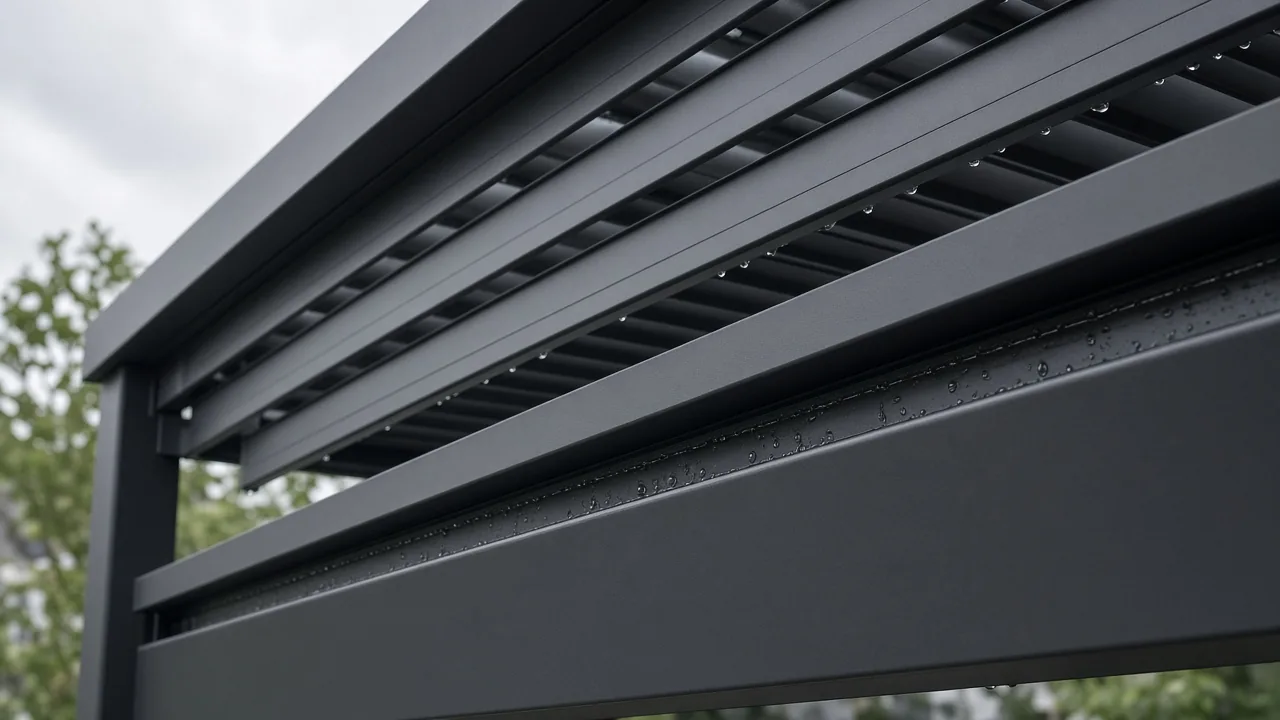
- Louvers. Rain lands on the closed double-wall aluminum louvers and runs toward the louver ends.
- Beam channels. Channels built into the beams collect the water from the louvers.
- Posts. The water runs from the beam channels down through the posts.
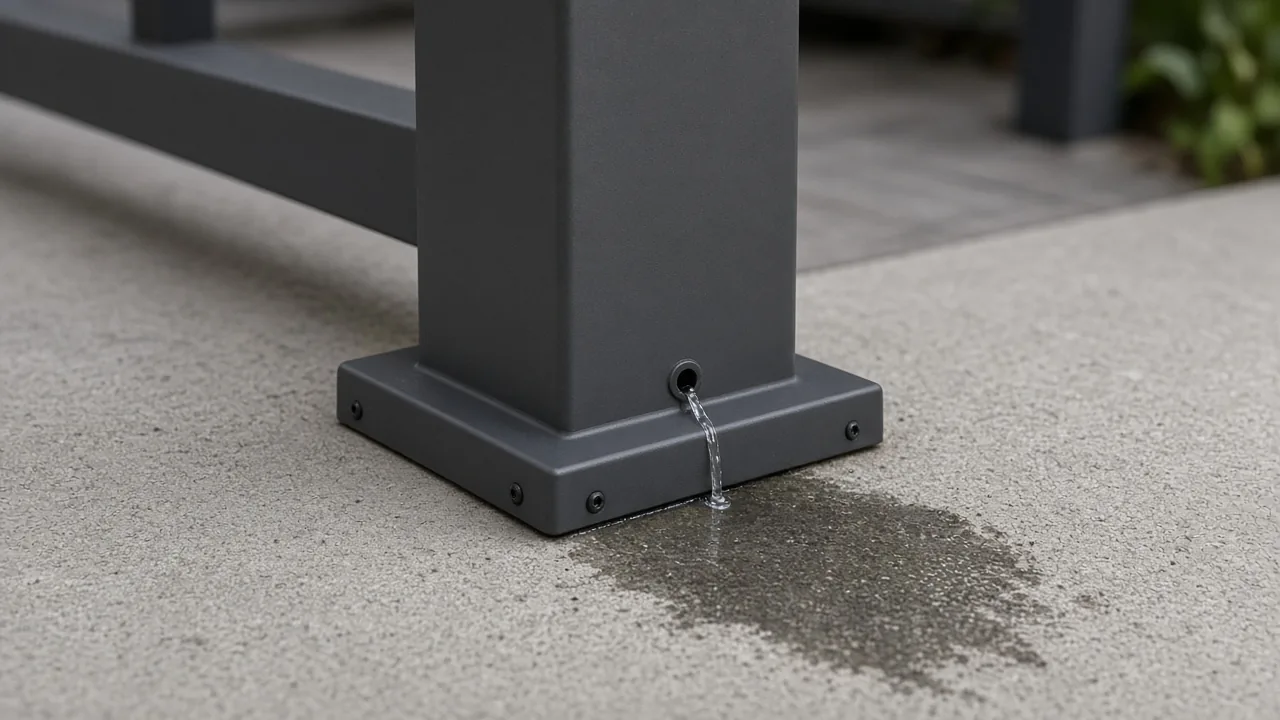
- Post bases. The water comes out near the bottom of the posts. Where it goes from there depends on your site.
The first three steps are part of the pergola. The last step is part of your yard, and it is the one homeowners most often forget to plan.
Do the louvers have to be fully closed for drainage to work?
Yes. The louvers rotate from 0 to 120 degrees. When they are open or tilted, there are gaps between them, and rain falls through to the patio. The roof only sends water into the beam channels when the louvers are closed.
If rain is on the way, use the remote to close the roof before it starts. If you get caught by a sudden shower, closing the louvers right away keeps more of the patio dry.
Does a closed louvered pergola keep everything underneath dry?
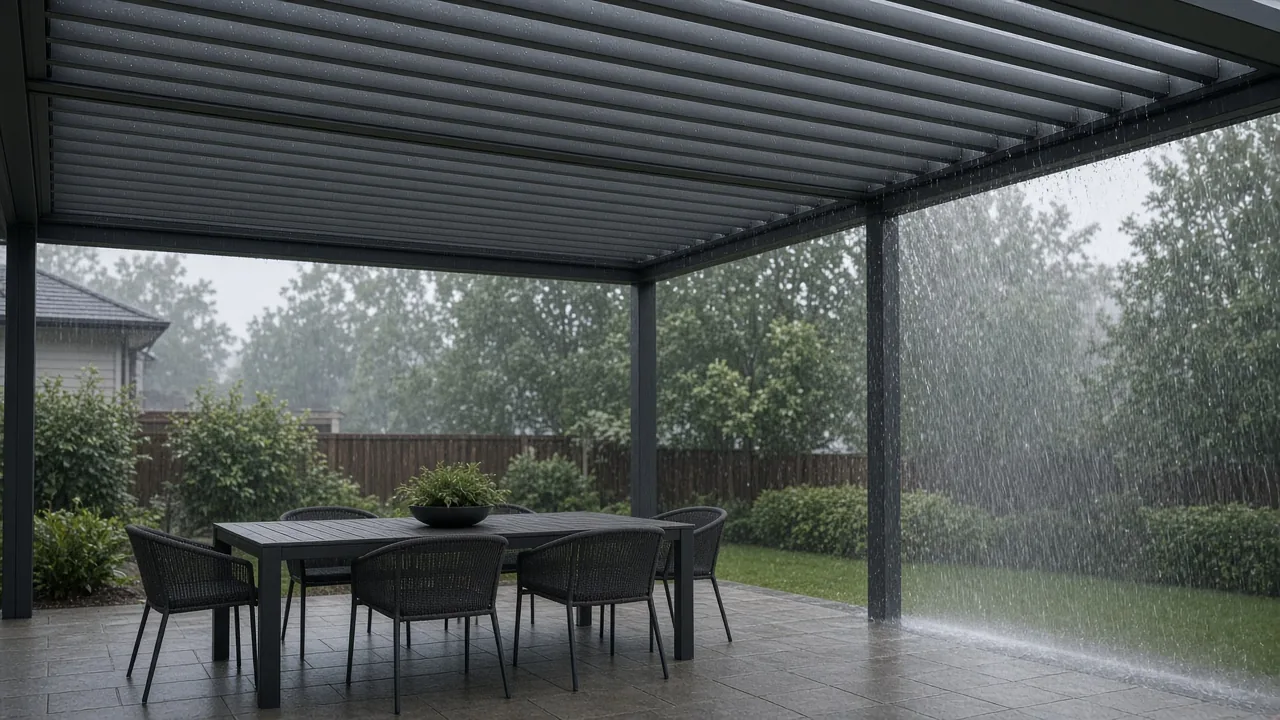
It keeps most rain from coming through the roof. It does not stop rain from coming in the sides. Wind can push rain sideways under the roof, and furniture near the open edges can still get wet. Splash from the ground around the patio can also reach the edges.
If staying dry is your main goal, read can a louvered pergola keep you dry in the rain. It covers what to expect in different kinds of weather.
Where does the water go when it leaves the posts?
This is the part to plan before installation. Every drop that lands on the closed roof comes out near the post bases, so think about where that water will flow:
- Away from the house. Water should not run toward your foundation or pool against a wall.
- Away from doors and walkways. Runoff across a door threshold or main path is a nuisance in summer and a slip risk in freezing weather.
- Off the patio. Check that your patio slopes enough to move water away from the posts.
- To a place that can take it. Options include a gravel bed, a splash block, planting beds, or a connection to an existing yard drain. Ask a local contractor what works on your lot and what local rules allow.
If you are planning a layout close to the house, think about where the water that drains out near the post bases will go. Our freestanding vs wall-mounted guide covers drainage along with the other wall-side checks. The post layout differs by size, so the size guide is worth a look as well.
How much rain can a louvered pergola drain?
Louvano does not publish a drainage flow rate. In a very heavy downpour, any gutter system can briefly back up or overflow. The best thing you can do is keep the louvers and beam channels free of leaves and debris, and check that water drains freely near the post bases, so the full path stays open.
Why does water pool on top of closed louvers?
After a rain, some water can sit on top of closed louvers. Tilting the louvers with the remote lets that water run off. Some of it may drip onto the patio below, so do this before you set the table.
If water collects in the same spot after every storm, or a beam channel overflows in light rain, the frame may not be sitting level, or debris may be blocking the path. Avoid shimming posts or adjusting the frame yourself. Leveling should be confirmed against the product drawings and local codes. Clear any debris you can reach safely, then contact [email protected] with photos.
Why does a louvered pergola drip on dry mornings?
Condensation. On cool, humid nights, moisture in the air can form on metal surfaces, including aluminum louvers. It can drip in the morning even when it has not rained. This is normal and usually dries off as the day warms up.
How do you keep the drainage working?
- Clear leaves and twigs from the louvers and beam channels, especially in fall and after storms.
- Check that water drains freely near the post bases.
- Keep planting beds and mulch from piling up around the post bases.
- Follow the care instructions supplied with your pergola.
- Open the louvers with the remote to reach debris between them.
- Never climb onto or put weight on the louvers. Work from the ground or a stable ladder.
For a wider look at routine care for aluminum pergolas, see the maintenance section of our aluminum vs wood pergola guide.
FAQ
Do I need to add gutters to a louvered pergola?
Louvano pergolas have concealed drainage built into the frame. Water runs from the louvers into the beam channels and down through the posts. What you need to plan is where the water goes after it leaves the posts.
Where does the water come out?
Ask [email protected] how to plan for the water that drains out near the post bases for your size and layout.
Does the motor affect drainage?
The motor is hidden in the frame and rotates the louvers. Drainage happens through the louvers, beams, and posts once the louvers are closed. Close the roof before rain to use the drainage path.
What if water stops draining near the post bases?
Water can back up in the post and overflow the beam channel. Contact [email protected].
Who can I ask about drainage before ordering?
Email [email protected] with photos of your patio and notes about which way it slopes.