Yes, a paver patio can work for a motorized louvered pergola, as long as the posts sit on a solid base underneath the pavers. Anchoring the posts only into pavers set on sand or gravel is a common mistake. Pavers are a surface. They are not a foundation on their own.
How the posts are supported should be confirmed against the product drawings and local codes. This article explains why pavers alone are not enough, the usual ways to handle the post locations, and what to plan for drainage and power.
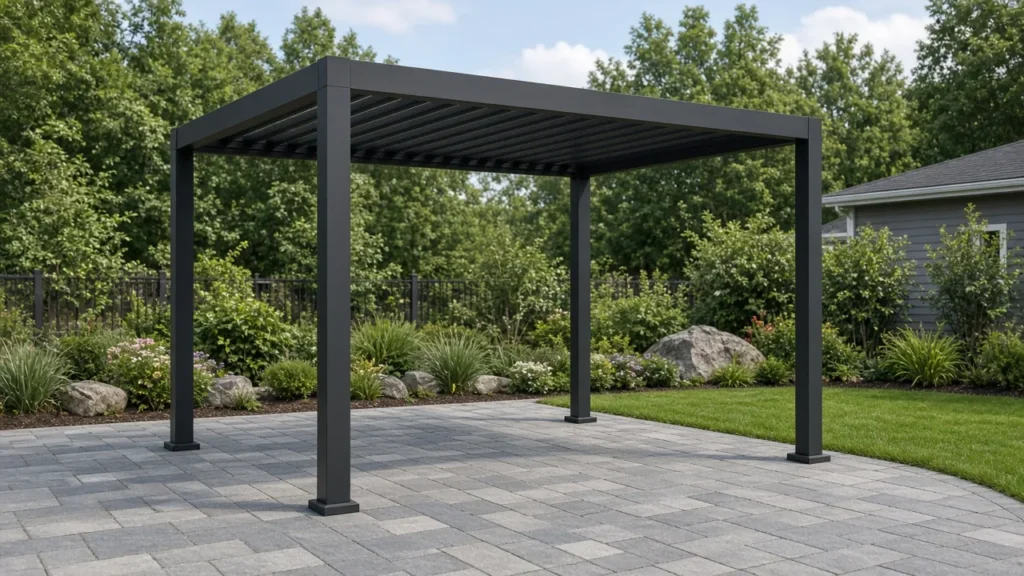
Why aren't pavers strong enough by themselves?
A paver patio is made of individual units set on a bed of sand and gravel, with sand in the joints. That works well for walking and furniture. It is a poor place to anchor a roof.
- An anchor driven into one paver holds only that paver, which is resting on sand.
- Pavers can shift, settle, or lift over time, especially after heavy rain or freeze and thaw cycles.
- Short anchors often stop inside the paver and never reach anything solid.
A motorized louvered pergola needs its posts to stay put so the frame stays square and the louvers can rotate and close evenly.
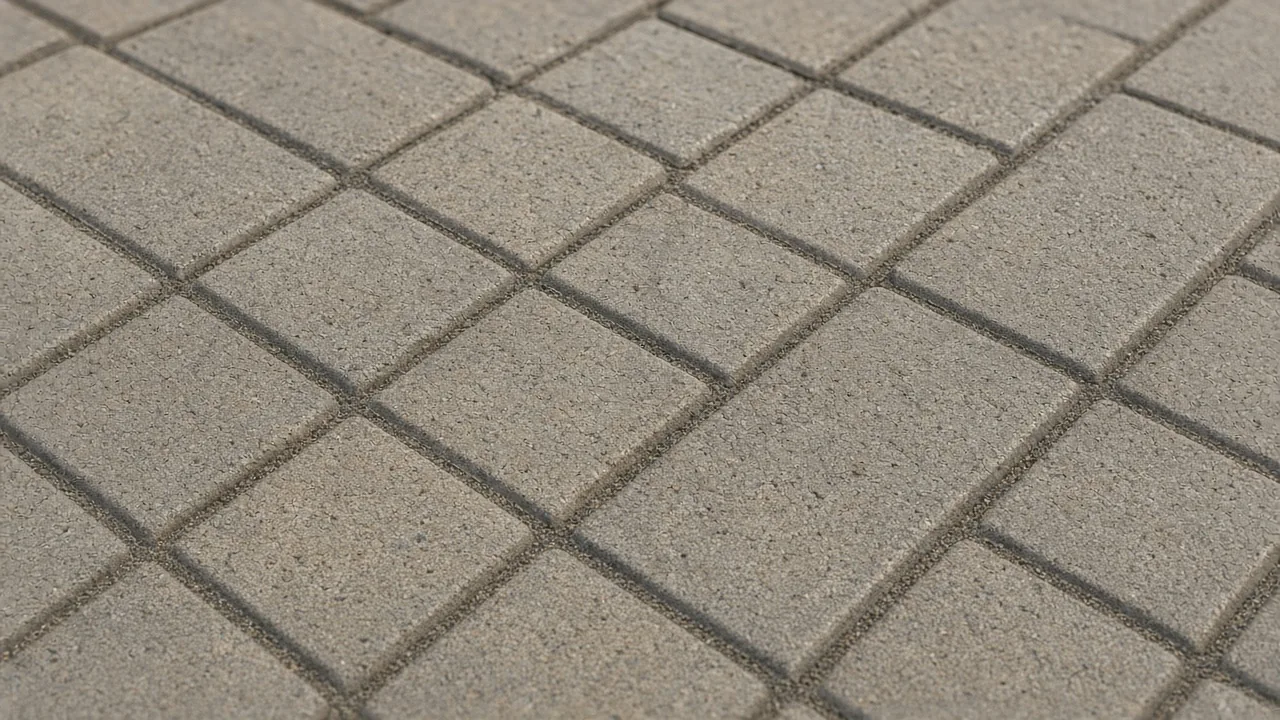
What do the posts sit on in a paver patio?
The usual approach is to give each post its own solid base under the pavers:
- Lift the pavers where each post will stand.
- Dig and pour a concrete footing or pad at each post location, sized to the product drawings and local code.
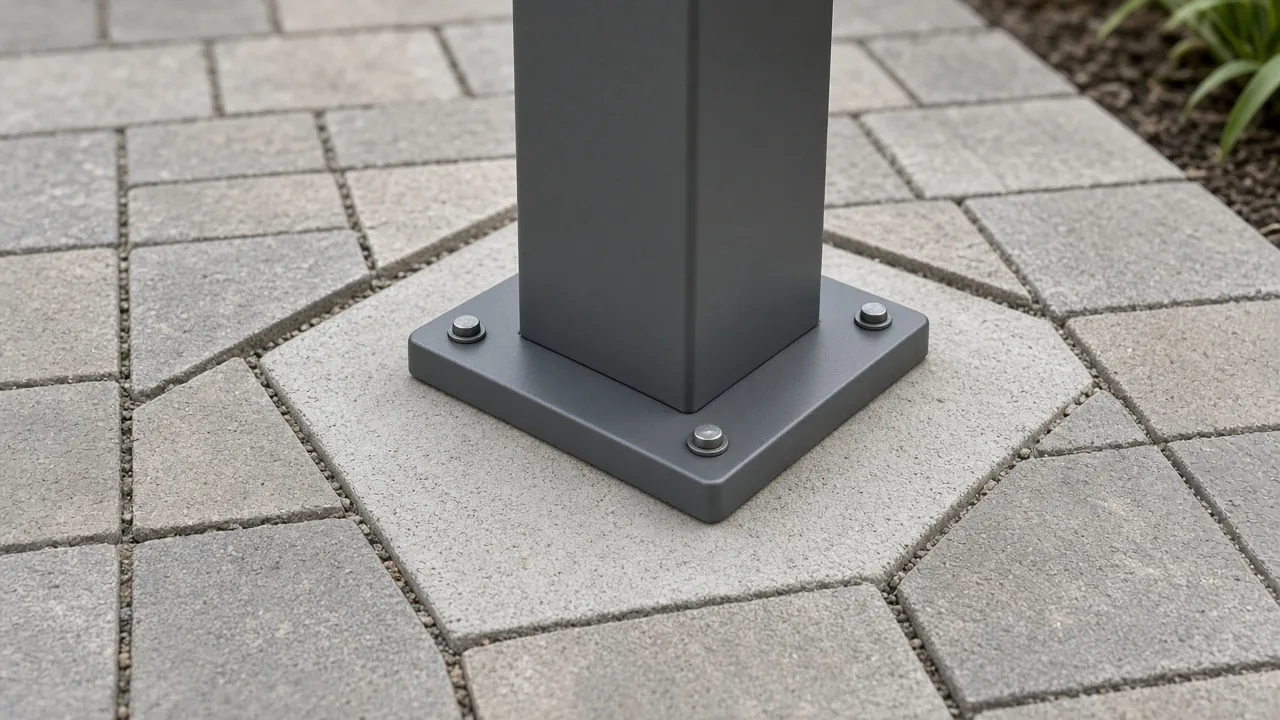
- Set the post base on the concrete.
- Cut and reset the pavers around the post.
Another option on some projects is a continuous concrete pad under part of the patio, with pavers laid around or over it. Your installer will choose the approach based on the product drawings, your soil, and local code.
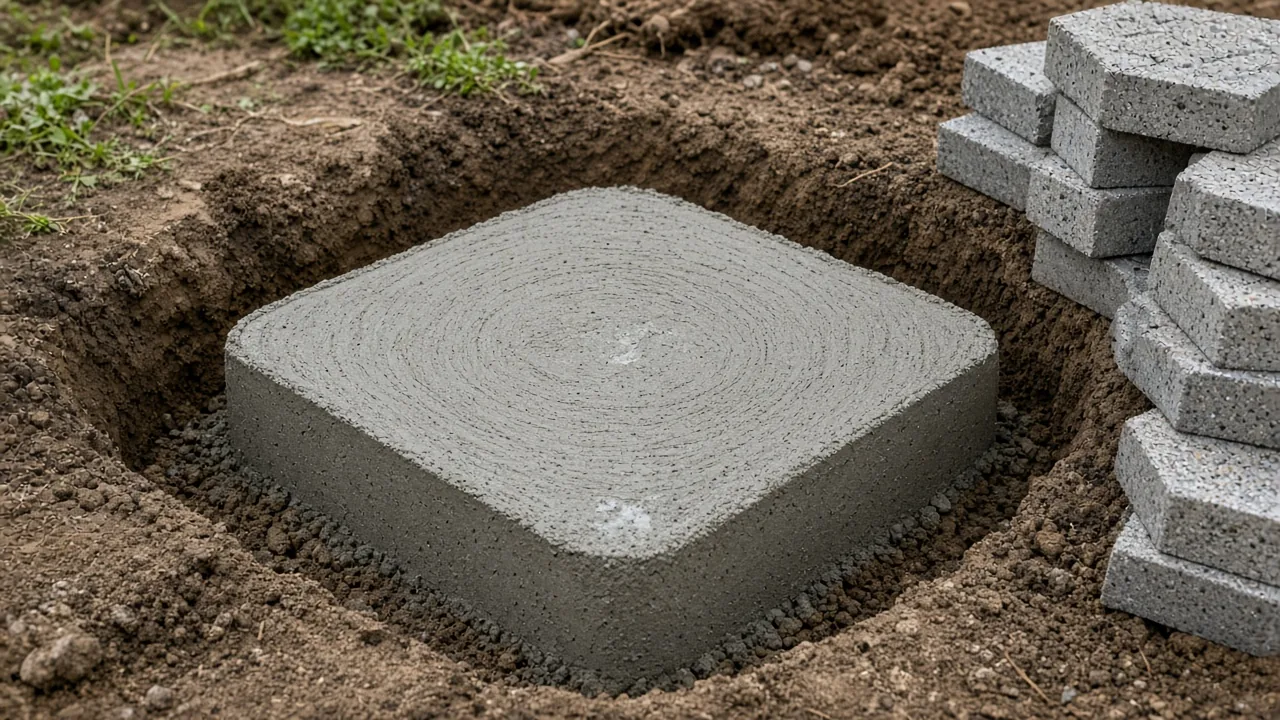
My contractor wants to anchor the pergola into the pavers. Should I say no?
Ask questions before you agree. Homeowners run into this a lot. Ask your contractor:
- What will each post be anchored to below the pavers?
- Does the plan match the product drawings?
- Does it meet your local building code, and is a permit needed?
- Where will water drain near the post bases once the pavers are cut around them?
- Where will the electrical conduit run?
If the answer is that the anchors only go into the pavers and the sand below, ask for a plan with footings or a pad instead. For a broader look at bases, read what foundation a louvered pergola needs.
Are you building a new paver patio?
Then you have the best timing. Put the footings and the electrical conduit in before the pavers go down. It costs less effort to plan the post spots now than to lift finished pavers later. Mark the post locations from the product drawings for your size, 3 × 3 m (about 10 × 10 ft), 3 × 4 m (about 10 × 13 ft) or 4 × 4 m (about 13 × 13 ft), and leave some distance from the patio edge. The size guide helps you check furniture clearance between the posts.
What if the pavers are on top of a concrete slab?
Some patios have pavers or stone set over an older concrete slab. In that case, the posts may anchor through to the slab if it is thick enough and in good condition. That is really a concrete question. See can you put a louvered pergola on concrete.
Where does rainwater go on a paver patio?
Louvano pergolas use concealed drainage. With the louvers closed, rain runs from the louvers into the beam channels, then down through the posts, and out near the post bases. Ask [email protected] how to plan for the water that drains out near the post bases for your size and layout.
On pavers, that water needs a plan:
- Keep the outlet clear. When pavers are cut around a post, make sure the outlet is not buried or blocked.
- Protect the joints. Steady runoff can wash out joint sand and leave pavers loose.
- Watch for ice. In cold weather, water that collects in joints can freeze.
- Send it away. Direct the water away from the house, doors, and walkways, toward a planting bed, gravel strip, or yard drain.
For more, read how a louvered pergola drains water.
How do you get power to a pergola on pavers?
A motorized pergola needs power to rotate the louvers. On a Louvano pergola, the motor is hidden in the frame. Having a patio does not mean there is a circuit at the patio. A licensed electrician should plan the connection, confirmed against the product drawings and local codes.
On a paver patio, conduit is easiest to run before the pavers are laid, or while they are lifted for the footings. See motorized pergola electrical requirements.
Do freestanding and wall-mounted layouts change the paver question?
A freestanding pergola has all of its posts on the patio, so every post needs a solid base. A layout that relates to the house wall still has posts on the patio, and it adds wall structure and flashing questions. Whether a wall-mounted layout is available for your site is something to confirm with [email protected]. See the freestanding vs wall-mounted guide.
Do you need a permit?
It depends on your city or county, and your HOA may have its own rules. A motorized roof that can close is often reviewed more like a patio cover. We cannot promise any approval. The pergola permit guide explains what to ask.
FAQ
Can I use longer anchors through the pavers? Only if they reach a solid base that matches the product drawings and local code. Anchors that stop in the pavers or the sand bed will not hold the posts in place.
Do I have to remove the whole patio? Usually not. The common approach is to lift pavers only where the posts will stand, add footings, and reset the pavers around them.
Will cutting pavers around the posts look messy? A careful installer can make neat cuts. Ask to see how the outlets will stay clear before the cuts are made.
What if my pavers already sink in spots? Fix the base first. Sinking pavers point to a soft or washed-out bed, and that area may need extra work before the pergola goes in.
Who can I ask before ordering? Email [email protected] with your site and installation questions, plus photos of your patio. Short answers to common questions are on our FAQ page.