Louvered pergola vs traditional pergola: what’s the difference?
A traditional pergola and a louvered pergola share the same basic shape: posts, beams, and something overhead. The difference is the roof. A traditional pergola has an open grid of rafters or slats that never moves. A louvered pergola has a roof of louvers that you can open, angle, or close.
That one difference changes how much sun and rain reach you, what the structure needs to install, and how you care for it. This guide compares the two.
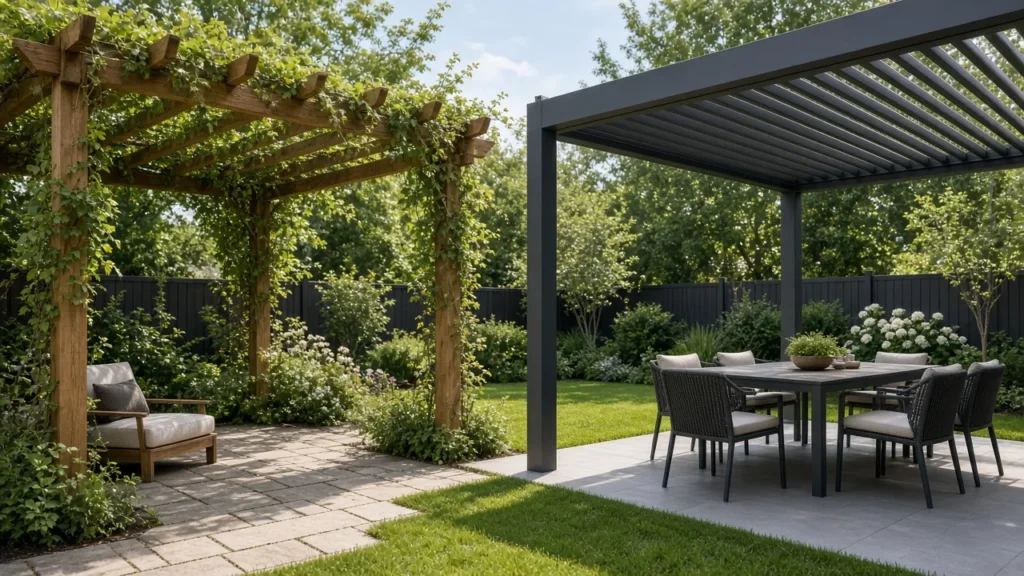
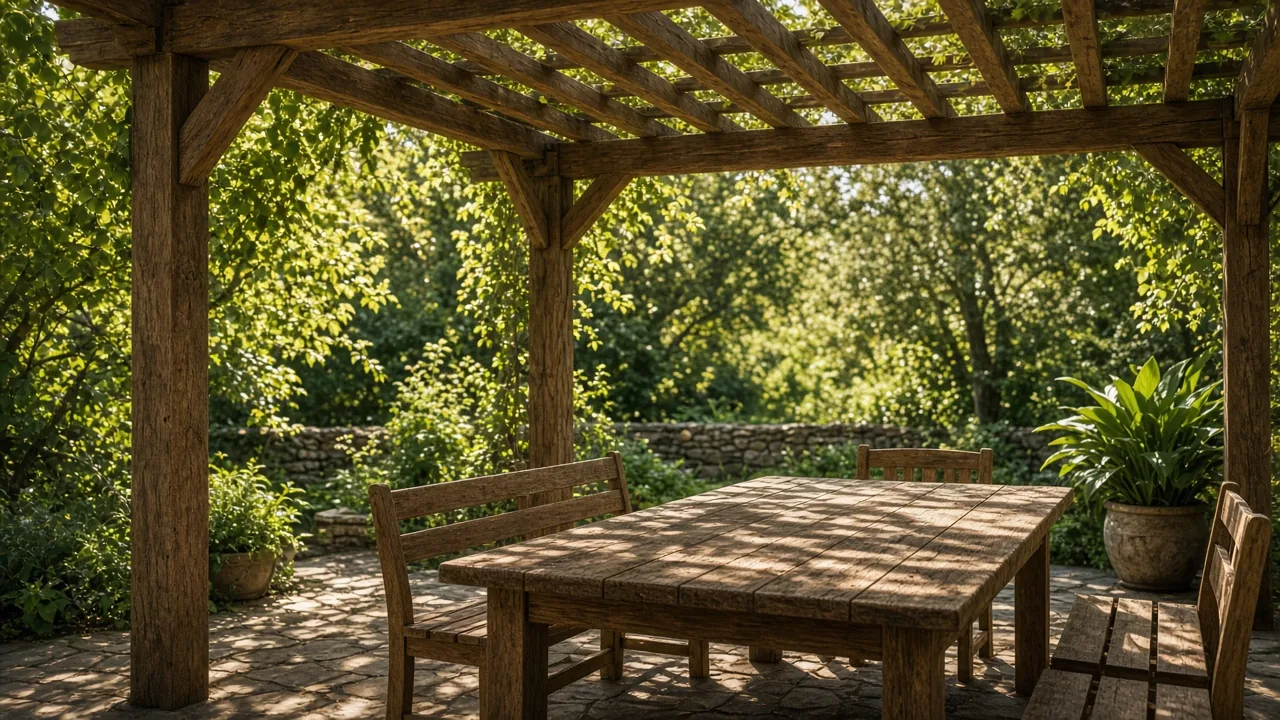
What is a traditional pergola?
A traditional pergola is a frame of posts and beams topped with an open grid of rafters, slats, or lattice. Most are wood, and some are vinyl or metal. The open roof gives filtered, dappled shade that shifts as the sun moves.
Many people grow vines, roses, or wisteria over a traditional pergola, using the grid as a trellis. It is a classic garden look.
What is a louvered pergola?
A louvered pergola replaces the fixed grid with rotating louvers. On a Louvano pergola, the louvers are double-wall aluminum and rotate from 0 to 120 degrees by remote control. The motor is hidden in the frame, and the frame has a powder-coated finish with 304 stainless steel fasteners.
Open the louvers for sun and sky. Angle them for shade. Close them when it rains, and water runs from the louvers into the beam channels and down through the posts.
How do they compare side by side?
| Traditional pergola | Louvered pergola | |
|---|---|---|
| Roof | Fixed open grid | Louvers open, angle, or close |
| Shade | Filtered, always the same | Adjustable from full sun to full shade |
| Rain | Passes through the open roof | Closed louvers shed rain through concealed drainage |
| Common materials | Wood, vinyl, or metal | Aluminum (Louvano: double-wall aluminum louvers, powder-coated finish) |
| Power | Usually none | Needs a power connection for the motor |
| Plants | Vines can grow over the top | Keep climbing plants off the louvers and frame |
| Upkeep | Wood needs staining or sealing | Cleaning and clearing the beam channels |
Which gives better shade?
A traditional pergola gives steady, partial shade. On a hot afternoon, sun still comes through the gaps.
A louvered pergola lets you choose. Angle the louvers to block direct sun while letting light and air through, or close them completely for full shade. You can adjust it as the sun moves during the day.
Which handles rain better?
A traditional pergola’s open roof lets rain fall straight through, unless you add a separate cover.
A louvered pergola is designed for use in the rain. With the louvers closed, rain drains through the beam channels and posts. The sides stay open, so wind-blown rain can reach the edges. Read can a louvered pergola keep you dry in the rain and how a louvered pergola drains water.
Can you grow vines on a louvered pergola?
It is best to keep climbing plants off a louvered pergola. Vines can wrap around louvers and get in the way of their movement, and leaves and stems can collect in the beam channels where water needs to drain.
If you love greenery, put planters or climbing plants on a separate trellis nearby, or plant around the base where they won’t reach the louvers. If a vine-covered garden structure is what you want most, a traditional pergola is the better fit.
What does each need to install?
A traditional pergola usually needs posts set in footings or anchored to a slab. Most don’t need electrical work.
A louvered pergola needs:
- A solid foundation for the posts. See what foundation a louvered pergola needs.
- A permanent power connection for the motor, planned by a licensed electrician. See motorized pergola electrical requirements.
- A plan for where water from the posts goes.
For how the pergola is mounted on your site, see our freestanding vs wall-mounted guide and ask [email protected] about your layout. Either type may need a permit. See our pergola permit guide.
How does upkeep compare?
A wood pergola needs regular staining or sealing to protect it from moisture, rot, and insects. Our aluminum vs wood pergola guide covers this in detail.
A louvered aluminum pergola needs different care, including keeping the beam channels clear so water drains. Follow the care instructions supplied with your pergola. See motorized pergola maintenance and does an aluminum louvered pergola rust.
What size should I compare?
Louvano pergolas come in 10×13 and 10×20. A 10×13 fits a dining table or a small seating group. A 10×20 fits dining and lounging together. See the size guide for layouts.
How do I decide?
A traditional pergola may fit better if:
- You want a garden structure covered in vines
- Filtered shade is enough, and you don’t need rain cover
- You’d rather not plan electrical work
A louvered pergola may fit better if:
- You want to adjust sun and shade during the day
- You want to stay outside when it rains
- You prefer aluminum’s upkeep to staining wood
If you are weighing the motor, read are motorized pergolas worth it. For other comparisons, see louvered pergola vs gazebo and louvered pergola vs retractable awning.
FAQ
What is the main difference between a louvered and a traditional pergola?
The roof. A traditional pergola has a fixed open grid. A louvered pergola has louvers you can open, angle, or close.
Does a traditional pergola keep out rain?
No. Rain passes through the open roof unless you add a separate cover.
Does a louvered pergola need electricity?
A motorized one does. Plan the connection with a licensed electrician.
Can I grow plants on a louvered pergola?
Keep climbing plants off the louvers and frame. Use planters or a separate trellis nearby.
More answers are on our FAQ page.