Every post of a motorized louvered pergola needs to stand on something solid and level. Depending on your yard, that can be an existing concrete slab in good condition, concrete footings, or a new pad. Grass, loose soil, and pavers set on sand are surfaces. They are not a foundation on their own.
Louvano does not publish a footing size in this article. The foundation for your pergola should be confirmed against the product drawings and local codes. This page covers the questions to answer first, whatever kind of ground you have.
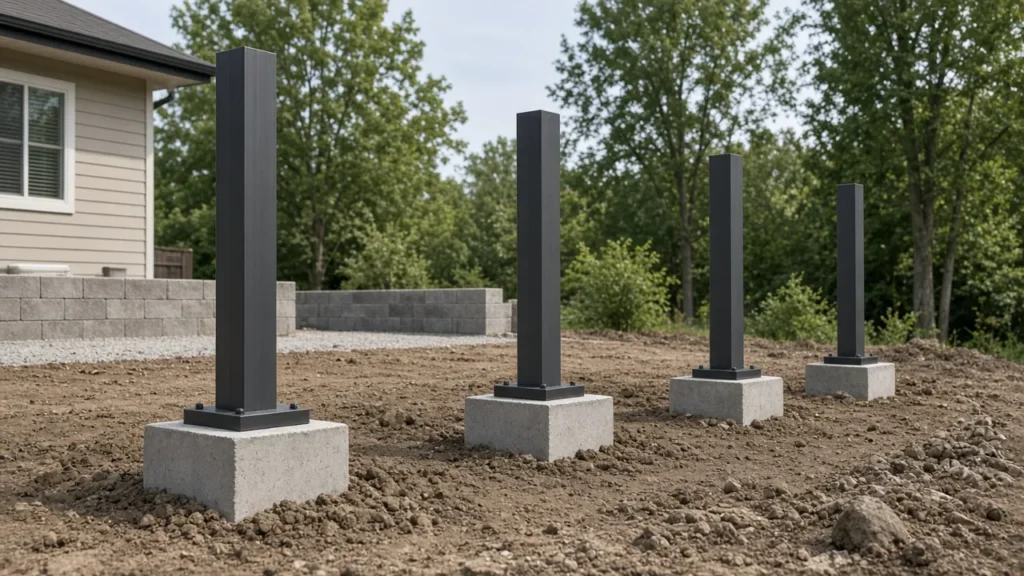
Why does a louvered pergola need a solid, level base?
A louvered pergola is a frame with moving parts. The louvers rotate from 0 to 120 degrees, and the frame needs to stay square and level for them to move and close evenly.
If one post sinks or tilts, the whole frame can go out of square. That can affect how the louvers line up when they close. It can also change how water moves through the drainage path, which runs from the louvers into the beam channels and down through the posts.
A solid base keeps the posts where they were set, so the roof keeps working the way it was built.
What are the common foundation options?
| Ground you have | What usually happens | Read more |
|---|---|---|
| Existing concrete patio | Posts may anchor to the slab if it is thick enough and in good condition. Some codes still require footings. | Pergola on concrete |
| Paver patio | Pavers are lifted at the post spots and the posts sit on footings or a pad underneath. | Pergola on pavers |
| Lawn or bare soil | Concrete footings or a new pad are poured for the posts. | See the grass section below |
| Sloped yard | Footings or a pad are built so the frame sits level. | See the slope section below |
| Deck | The deck structure has to be checked for the extra load at each post. | Ask [email protected] |
In every case, the details should be confirmed against the product drawings and local codes.
Can you put a louvered pergola on grass?
Not directly on the turf. Soil under a lawn compresses over time, shifts after heavy rain, and can heave when it freezes. Posts set on grass, or on spikes meant for light garden arbors, can move.
On a lawn, the usual approach is concrete footings or a new concrete pad under the posts. How deep footings need to go depends on your local building code, which often ties depth to the frost line in your area.
A few details matter on grass:
- Keep the post bases above the soil. Rainwater comes out near the bottom of the posts. If soil, mulch, or grass clippings pile up around the bases, they can block the outlets.
- Leave room to mow and trim. A small border of gravel or pavers around each post helps.
- Plan the power run. A licensed electrician should bury the wire in conduit to local code depth. Avoid running an extension cord across the lawn.
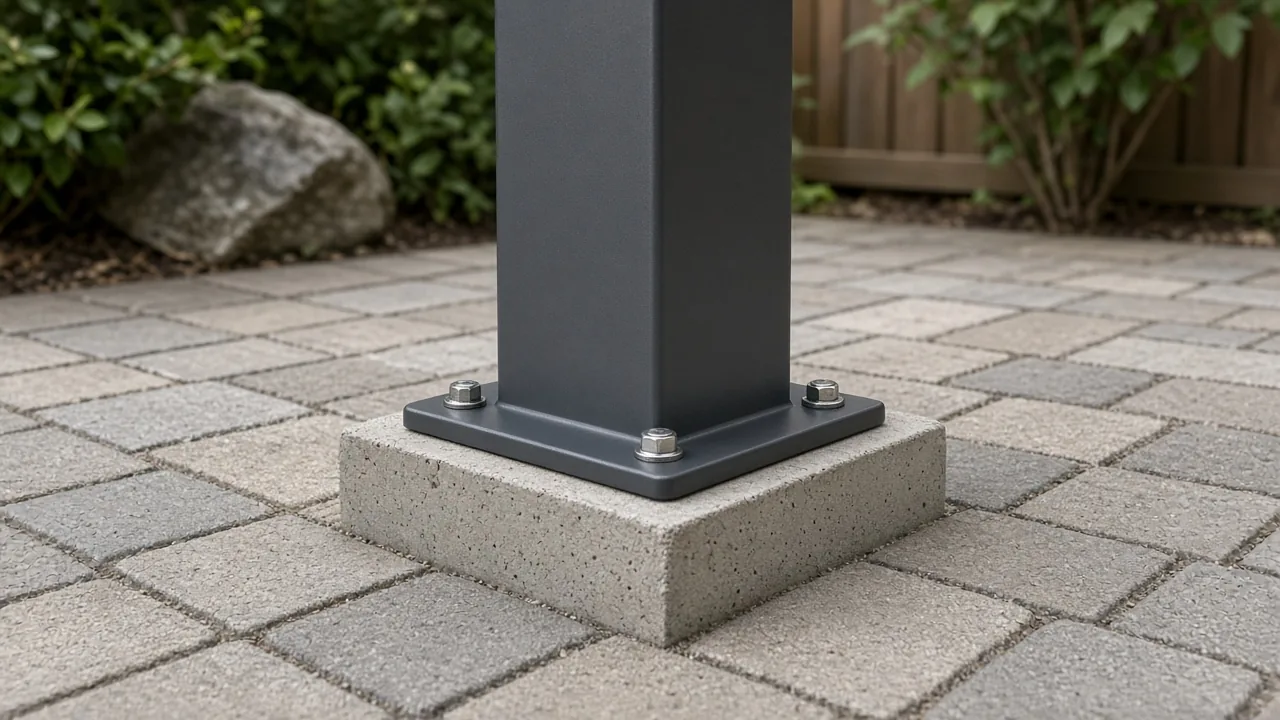
Can you put a louvered pergola on uneven ground?
Yes, the yard can slope, as long as the pergola frame sits level. The leveling happens in the foundation. Footings can be set to different heights, or a level pad or terrace can be built first.
Some small pergola kits suggest cutting the downhill posts shorter or stacking shims under the post bases. Avoid treating a motorized louvered pergola like a weekend kit. How the posts are leveled should be confirmed against the product drawings and local codes.
Think about water on a slope too. Runoff from the posts can help water leave the patio, or it can collect on the low side. Make sure it flows away from the house and from where people walk.
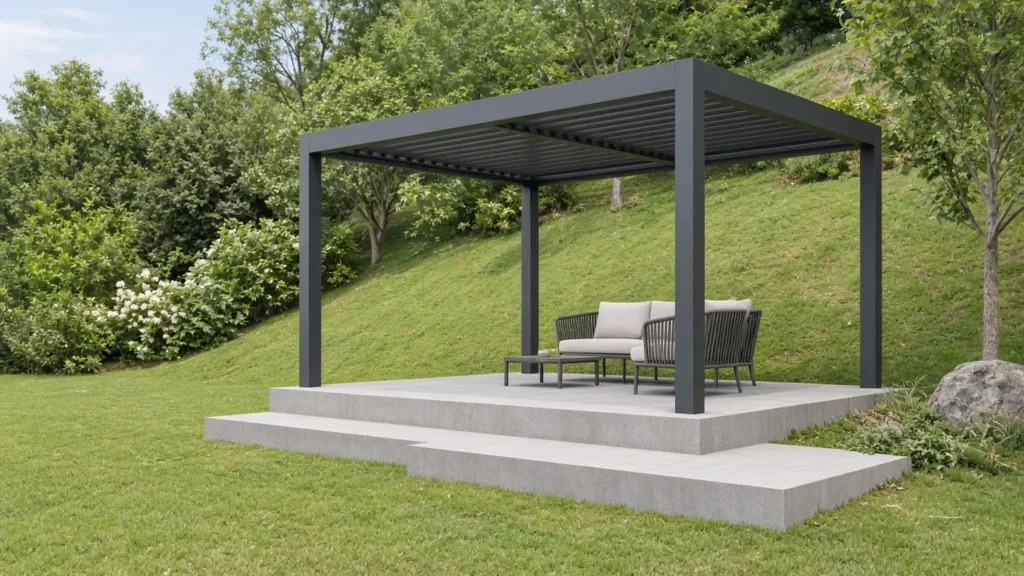
How do you lay out the posts?
Before any digging, mark the post locations on the ground:
- Choose your size: 10×13 or 10×20. The size guide helps you pick.
- Mark the corners with stakes and string, using the post positions from the product drawings.
- Measure both diagonals. When they match, the layout is square.
- Check clearances to the house, doors, fences, trees, and property lines.
- Call 811 so buried utility lines are marked before anyone digs.
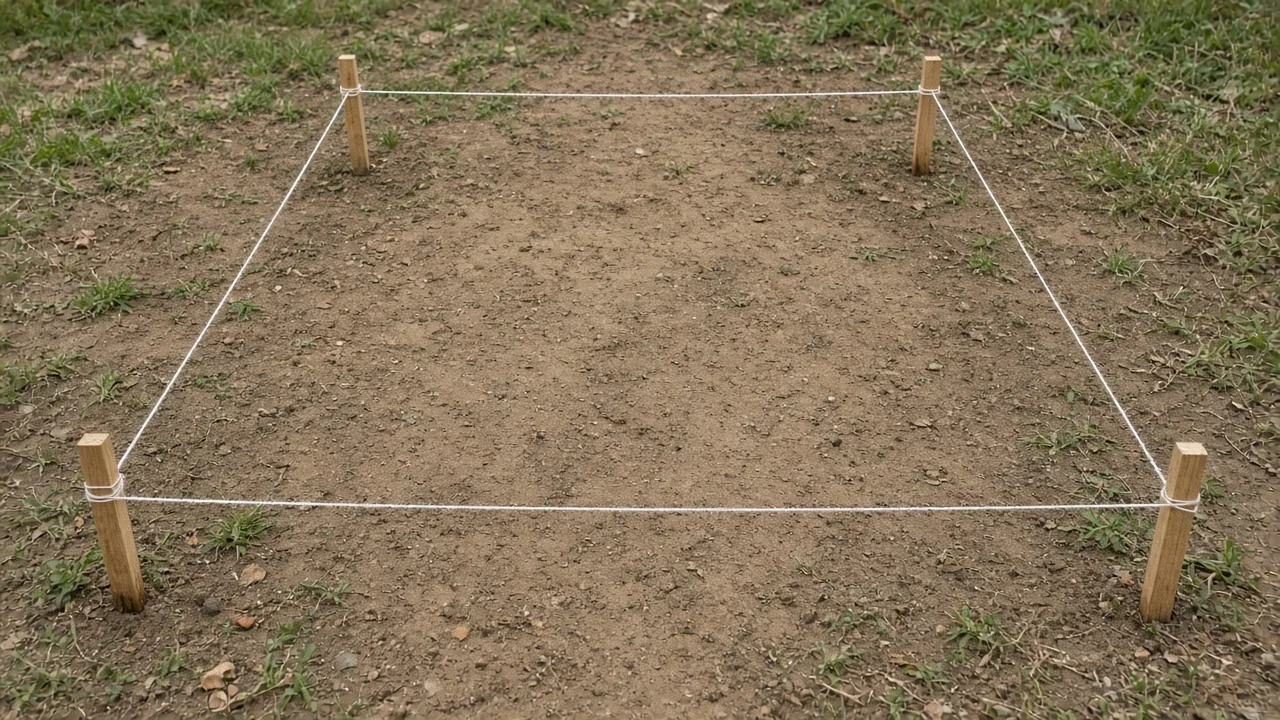
Where does the rainwater go from the posts?
Louvano pergolas use concealed drainage. With the louvers closed, rain runs from the louvers into the beam channels, then down through the posts, and out near the post bases. Ask [email protected] how to plan for the water that drains out near the post bases for your size and layout.
When you plan the foundation, keep the outlets above the finished ground level and give the water a clear route away from the house, doors, and walkways. For more, read how a louvered pergola drains water.
Should you run power before the foundation goes in?
Yes. A motorized pergola needs power to rotate the louvers. On a Louvano pergola, the motor is hidden in the frame. Getting conduit in place before concrete is poured or pavers are laid is much easier than adding it later. See motorized pergola electrical requirements.
Does a wall-mounted layout still need a foundation?
Yes. Any post that stands on the ground needs a solid base. A layout that relates to the house wall also brings in wall structure and flashing questions. Whether a wall-mounted layout is available for your site is something to confirm with [email protected]. Our freestanding vs wall-mounted guide covers both sides.
Do you need a permit for pergola footings?
Many building departments review footings as part of a pergola or patio cover permit, and your HOA may have its own review. We cannot promise any approval. The pergola permit guide lists what to ask.
FAQ
How deep should pergola footings be? That depends on your local building code, your soil, and the product drawings. In colder areas, codes often require footings to go below the frost line.
Can I use ground spikes or screw anchors instead of concrete? Light anchors made for garden arbors are not a substitute for the foundation shown on the product drawings. Ask your installer what your local code allows.
Who designs the foundation? A local contractor, and in some areas an engineer, working from the product drawings and local codes.
Should water from the posts drain into the soil next to the footing? Plan a route away from the footings and the house, such as a gravel bed or an existing yard drain. Ask a local contractor what works on your lot.
Where can I ask questions before ordering? Email [email protected] with your site and installation questions, plus photos of the area and the size you are considering. Short answers to other common questions are on our FAQ page.